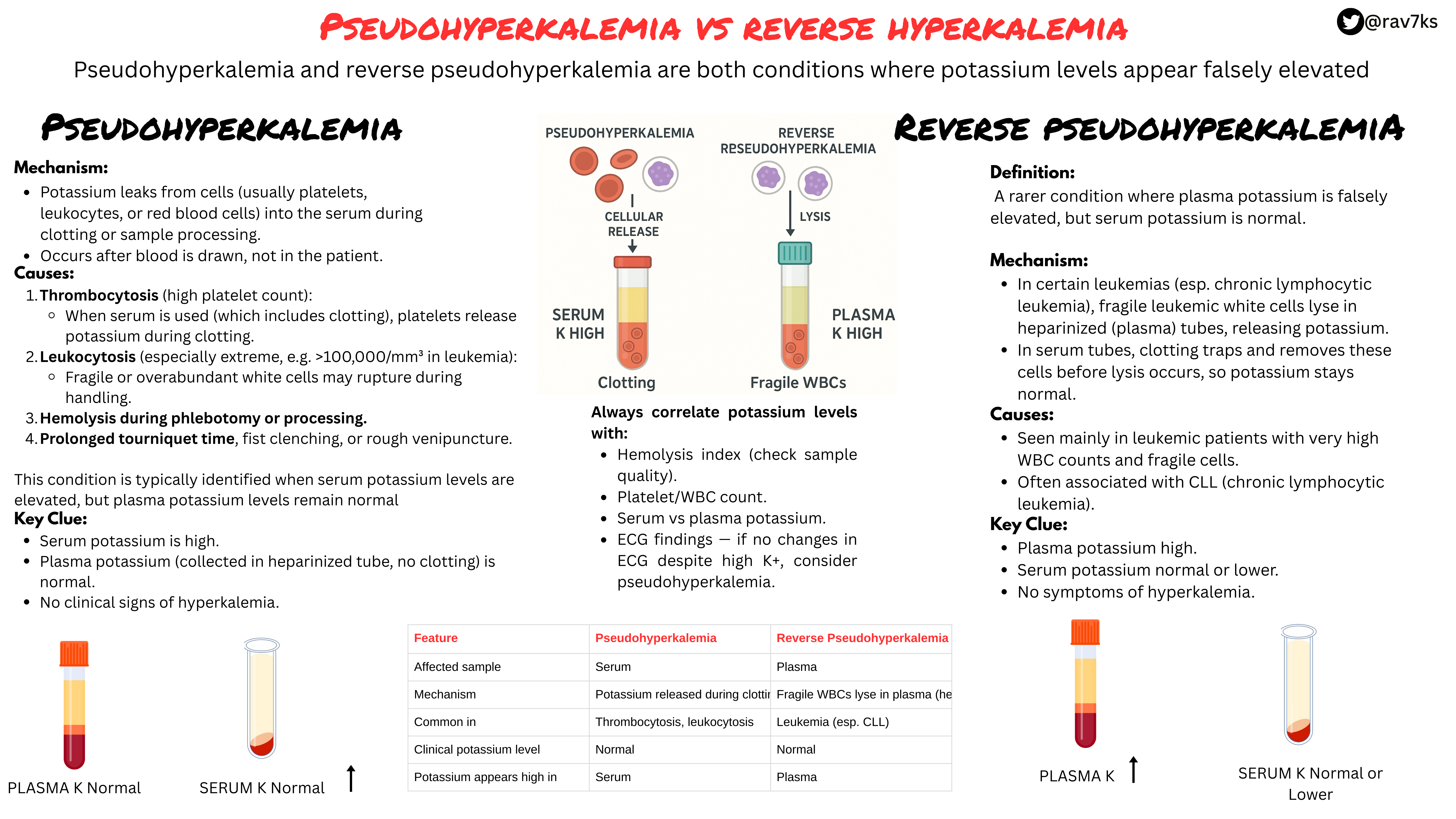
Pseudohyperkalemia vs Reverse Hyperkalemia

Pseudohyperkalemia and reverse pseudohyperkalemia are both conditions where potassium levels appear falsely elevated.

Pseudohyperkalemia:
This condition is typically identified when serum potassium levels are elevated, but plasma potassium levels remain normal.
Mechanism:
 • Potassium leaks from cells (usually platelets, leukocytes, or red blood cells) into the serum during clotting or sample processing.
 • Occurs after blood is drawn, not in the patient.
Causes:
 • Thrombocytosis (high platelet count): When serum is used (which includes clotting), platelets release potassium during clotting.
 • Leukocytosis (especially extreme, e.g., >100,000/mm³ in leukemia): Fragile or overabundant white cells may rupture during handling.
 • Hemolysis during phlebotomy or processing.
 • Prolonged tourniquet time, fist clenching, or rough venipuncture.
Key Clues:
 • Serum potassium is high.
 • Plasma potassium (collected in heparinized tube, no clotting) is normal.
 • No clinical signs of hyperkalemia.

Reverse Pseudohyperkalemia:
A rarer condition where plasma potassium is falsely elevated, but serum potassium is normal.
Mechanism:
 • In certain leukemias (especially chronic lymphocytic leukemia), fragile leukemic white cells lyse in heparinized (plasma) tubes, releasing potassium.
 • In serum tubes, clotting traps and removes these cells before lysis occurs, so potassium stays normal.
Causes:
 • Seen mainly in leukemic patients with very high WBC counts and fragile cells.
 • Often associated with CLL (chronic lymphocytic leukemia).
Key Clue:
 • Plasma potassium high.
 • Serum potassium normal or lower.
 • No symptoms of hyperkalemia.

Always correlate potassium levels with:
 • Hemolysis index (check sample quality)
 • Platelet/WBC count
 • Serum vs plasma potassium
 • ECG findings — if no changes in ECG despite high K+, consider pseudohyperkalemia.

#Pseudohyperkalemia #Reverse #Hyperkalemia #Potassium #Nephrology #Diagnosis


