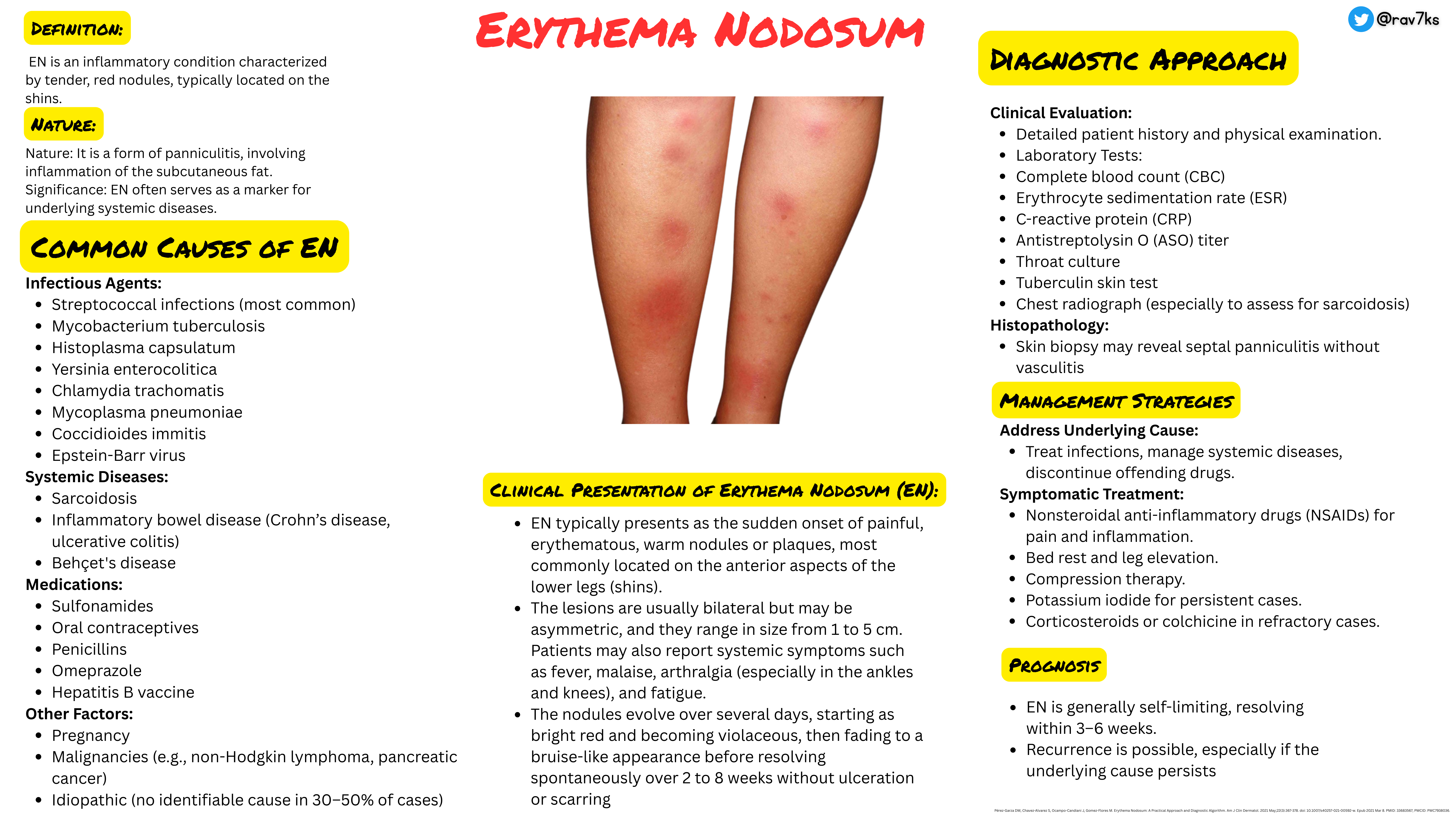
Erythema Nodosum Overview

Definition:
 • EN is an inflammatory condition characterized by tender, red nodules, typically located on the shins.

Nature:
 • It is a form of panniculitis, involving inflammation of the subcutaneous fat.

Significance:
 • EN often serves as a marker for underlying systemic diseases.

Common Causes of EN:
 • Infectious Agents:
   - Streptococcal infections (most common)
   - Mycobacterium tuberculosis
   - Histoplasma capsulatum
   - Yersinia enterocolitica
   - Chlamydia trachomatis
   - Mycoplasma pneumoniae
   - Coccidioides immitis
   - Epstein-Barr virus
 • Systemic Diseases:
   - Sarcoidosis
   - Inflammatory bowel disease (Crohn’s disease, ulcerative colitis)
   - Behçet's disease
 • Medications:
   - Sulfonamides
   - Oral contraceptives
   - Penicillins
   - Omeprazole
   - Hepatitis B vaccine
 • Other Factors:
   - Pregnancy
   - Malignancies (e.g., non-Hodgkin lymphoma, pancreatic cancer)
   - Idiopathic (no identifiable cause in 30–50% of cases)

Clinical Presentation of Erythema Nodosum (EN):
 • EN typically presents as the sudden onset of painful, erythematous, warm nodules or plaques, most commonly located on the anterior aspects of the lower legs (shins).
 • The lesions are usually bilateral but may be asymmetric, and they range in size from 1 to 5 cm. Patients may also report systemic symptoms such as fever, malaise, arthralgia (especially in the ankles and knees), and fatigue.
 • The nodules evolve over several days, starting as bright red and becoming violaceous, then fading to a bruise-like appearance before resolving spontaneously over 2 to 8 weeks without ulceration or scarring.

Diagnostic Approach:
Clinical Evaluation:
 • Detailed patient history and physical examination.
Laboratory Tests:
 • Complete blood count (CBC)
 • Erythrocyte sedimentation rate (ESR)
 • C-reactive protein (CRP)
 • Antistreptolysin O (ASO) titer
 • Throat culture
 • Tuberculin skin test
 • Chest radiograph (especially to assess for sarcoidosis)
Histopathology:
 • Skin biopsy may reveal septal panniculitis without vasculitis

Management Strategies:
Address Underlying Cause:
 • Treat infections, manage systemic diseases, discontinue offending drugs.
Symptomatic Treatment:
 • Nonsteroidal anti-inflammatory drugs (NSAIDs) for pain and inflammation.
 • Bed rest and leg elevation.
 • Compression therapy.
 • Potassium iodide for persistent cases.
 • Corticosteroids or colchicine in refractory cases.

Prognosis:
 • EN is generally self-limiting, resolving within 3–6 weeks.
 • Recurrence is possible, especially if the underlying cause persists.

#Erythema #Nodosum #Diagnosis #Management


