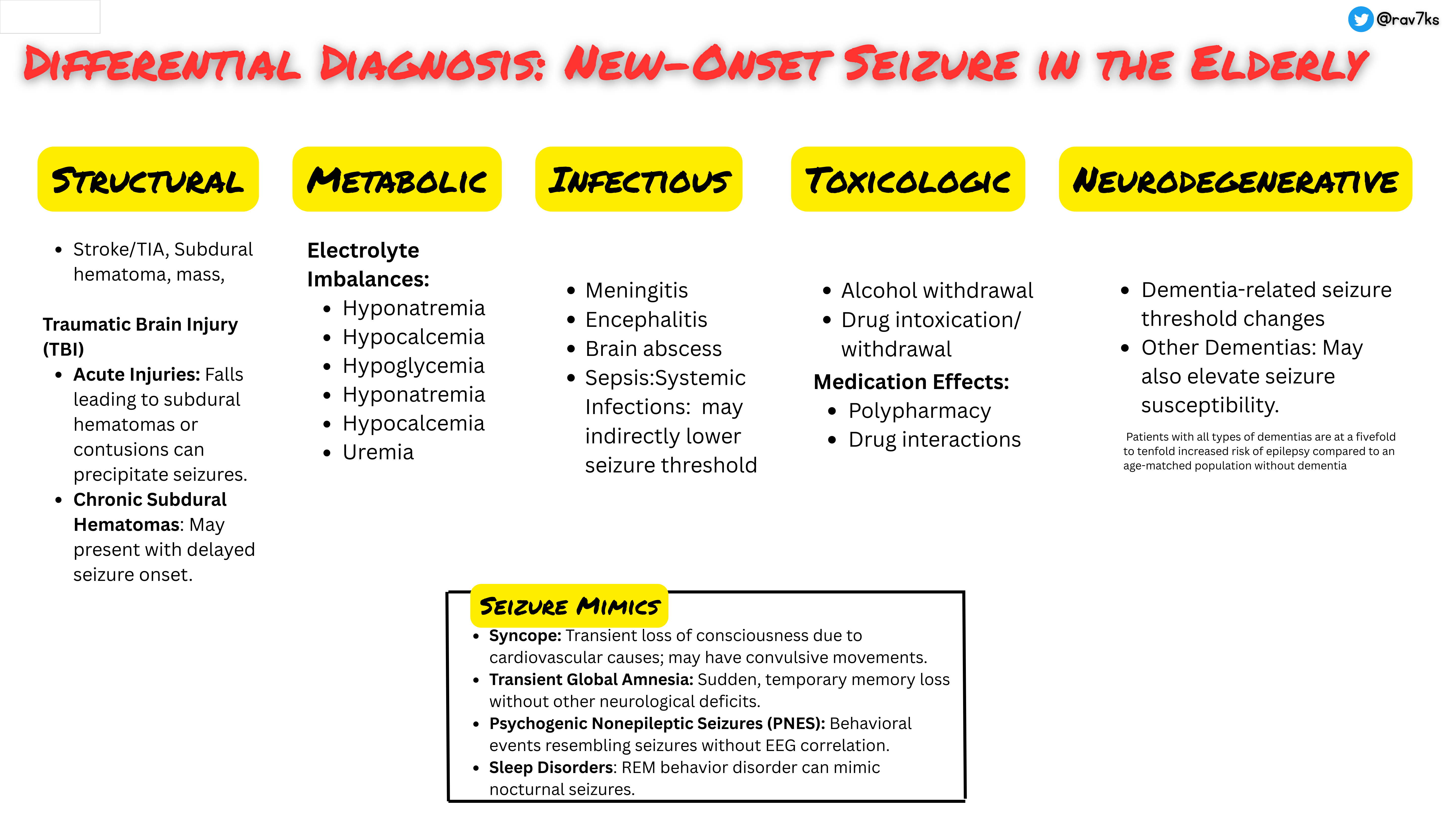
Differential Diagnosis: New-Onset Seizure in the Elderly

STRUCTURAL:
 • Stroke/TIA, Subdural hematoma, mass
 • Traumatic Brain Injury (TBI)
    - Acute Injuries: Falls leading to subdural hematomas or contusions can precipitate seizures.
    - Chronic Subdural Hematomas: May present with delayed seizure onset.

METABOLIC - Electrolyte Imbalances:
 • Hyponatremia
 • Hypocalcemia
 • Hypoglycemia
 • Hyponatremia
 • Hypocalcemia
 • Uremia

INFECTIOUS:
 • Meningitis
 • Encephalitis
 • Brain abscess
 • Sepsis: Systemic Infections may indirectly lower seizure threshold

TOXICOLOGIC:
 • Alcohol withdrawal
 • Drug intoxication/withdrawal
 • Medication Effects:
    - Polypharmacy
    - Drug interactions

NEURODEGENERATIVE:
Patients with all types of dementias are at a fivefold to tenfold increased risk of epilepsy compared to an age-matched population without dementia
 • Dementia-related seizure threshold changes
 • Other Dementias: May also elevate seizure susceptibility.

Seizure Mimics:
 • Syncope: Transient loss of consciousness due to cardiovascular causes; may have convulsive movements.
 • Transient Global Amnesia: Sudden, temporary memory loss without other neurological deficits.
 • Psychogenic Nonepileptic Seizures (PNES): Behavioral events resembling seizures without EEG correlation.
 • Sleep Disorders: REM behavior disorder can mimic nocturnal seizures.

#Differential #Diagnosis #Seizure #Elderly #Neurology #Geriatrics