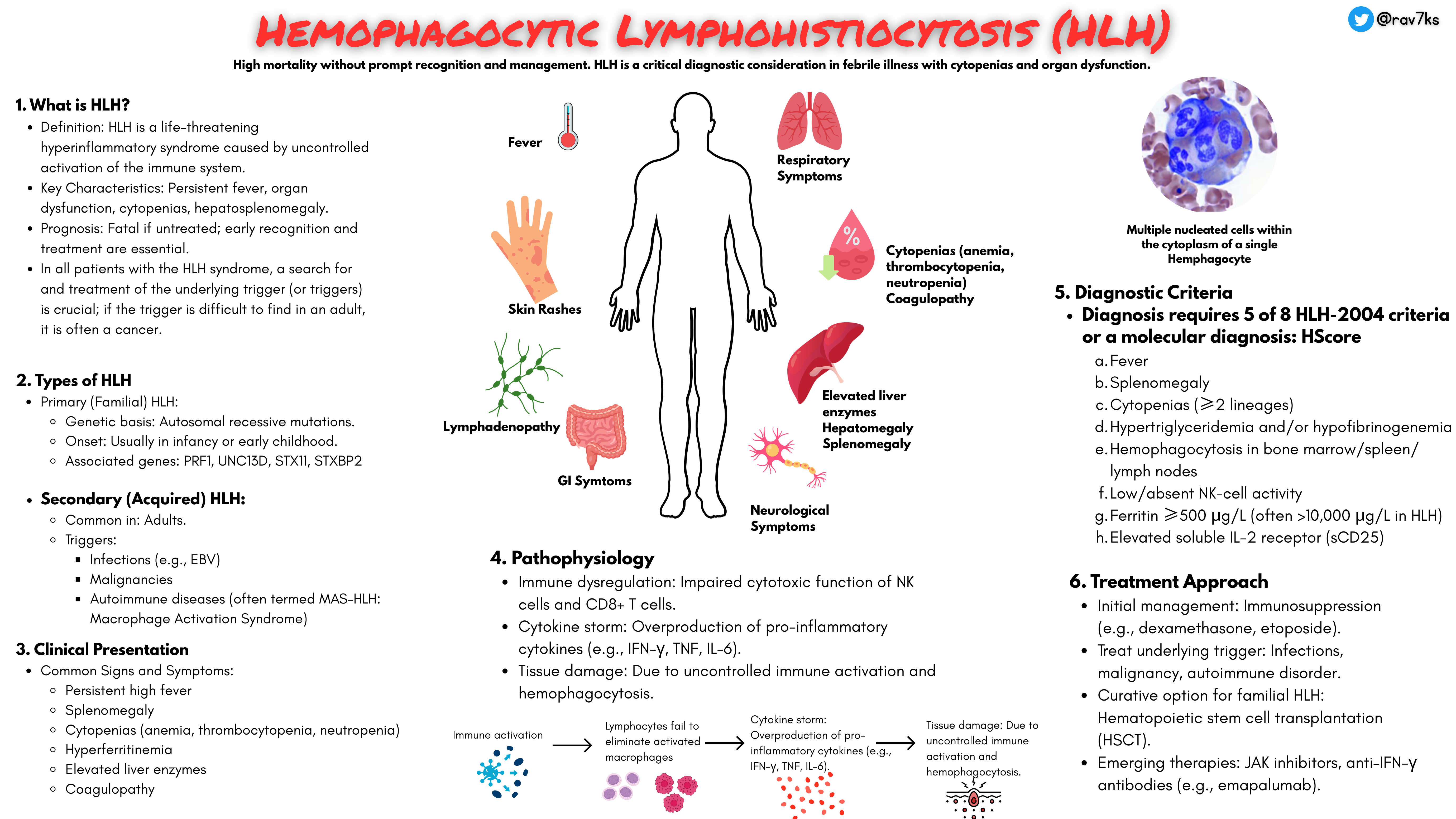
Hemophagocytic Lymphohistiocytosis (HLH)

High mortality without prompt recognition and management. HLH is a critical diagnostic consideration in febrile illness with cytopenias and organ dysfunction.

1. What is HLH?
• Definition: HLH is a life-threatening hyperinflammatory syndrome caused by uncontrolled activation of the immune system.
• Key Characteristics: Persistent fever, organ dysfunction, cytopenias, hepatosplenomegaly.
• Prognosis: Fatal if untreated; early recognition and treatment are essential.
• In all patients with the HLH syndrome, a search for and treatment of the underlying trigger (or triggers) is crucial; if the trigger is difficult to find in an adult, it is often a cancer.

2. Types of HLH
• Primary (Familial) HLH:
   - Genetic basis: Autosomal recessive mutations.
   - Onset: Usually in infancy or early childhood.
   - Associated genes: PRF1, UNC13D, STX11, STXBP2
• Secondary (Acquired) HLH:
   - Common in: Adults.
   - Triggers:
    ▪ Infections (e.g., EBV)
    ▪ Malignancies
    ▪ Autoimmune diseases (often termed MAS-HLH: Macrophage Activation Syndrome)

3. Clinical Presentation
• Common Signs and Symptoms:
   - Persistent high fever
   - Splenomegaly
   - Cytopenias (anemia, thrombocytopenia, neutropenia)
   - Hyperferritinemia
   - Elevated liver enzymes
   - Coagulopathy

4. Pathophysiology
• Immune dysregulation: Impaired cytotoxic function of NK cells and CD8+ T cells.
• Cytokine storm: Overproduction of pro-inflammatory cytokines (e.g., IFN-γ, TNF, IL-6).
• Tissue damage: Due to uncontrolled immune activation and hemophagocytosis.

5. Diagnostic Criteria - Diagnosis requires 5 of 8 HLH-2004 criteria or a molecular diagnosis: HScore
  a. Fever
  b. Splenomegaly
  c. Cytopenias (≥2 lineages)
  d. Hypertriglyceridemia and/or hypofibrinogenemia
  e. Hemophagocytosis in bone marrow/spleen/lymph nodes
  f. Low/absent NK-cell activity
  g. Ferritin ≥500 μg/L (often >10,000 μg/L in HLH)
  h. Elevated soluble IL-2 receptor (sCD25)

6. Treatment Approach
• Initial management: Immunosuppression (e.g., dexamethasone, etoposide).
• Treat underlying trigger: Infections, malignancy, autoimmune disorder.
• Curative option for familial HLH: Hematopoietic stem cell transplantation (HSCT).
• Emerging therapies: JAK inhibitors, anti-IFN-γ antibodies (e.g., emapalumab).

#HLH #Hemophagocytic #Lymphohistiocytosis #Diagnosis #Management #Hematology #HemeOnc