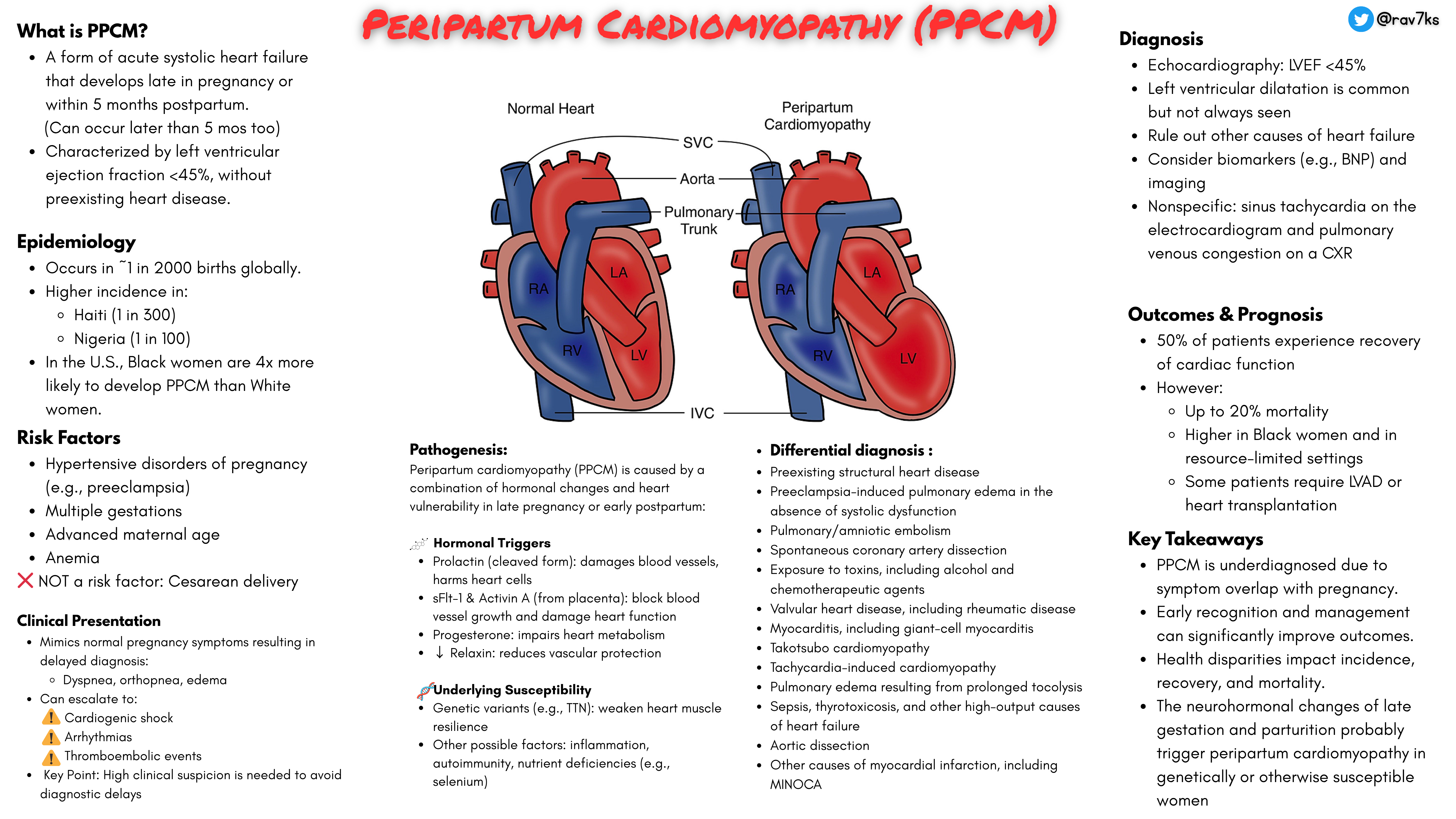
Peripartum Cardiomyopathy (PPCM)

What is PPCM?
• A form of acute systolic heart failure that develops late in pregnancy or within 5 months postpartum. (Can occur later than 5 mos too)
• Characterized by left ventricular ejection fraction <45%, without preexisting heart disease.

Epidemiology:
• Occurs in ~1 in 2000 births globally.
• Higher incidence in:
   - Haiti (1 in 300)
   - Nigeria (1 in 100)
• In the U.S., Black women are 4x more likely to develop PPCM than White women.

Risk Factors:
• Hypertensive disorders of pregnancy (e.g., preeclampsia)
• Multiple gestations
• Advanced maternal age
• Anemia
✗ NOT a risk factor: Cesarean delivery

Clinical Presentation:
• Mimics normal pregnancy symptoms resulting in delayed diagnosis:
   - Dyspnea, orthopnea, edema
• Can escalate to:
  ⚠️ Cardiogenic shock
  ⚠️ Arrhythmias
  ⚠️ Thromboembolic events
• Key Point: High clinical suspicion is needed to avoid diagnostic delays

Pathogenesis:
Peripartum cardiomyopathy (PPCM) is caused by a combination of hormonal changes and heart vulnerability in late pregnancy or early postpartum:

🧬 Hormonal Triggers
• Prolactin (cleaved form): damages blood vessels, harms heart cells
• sFlt-1 & Activin A (from placenta): block blood vessel growth and damage heart function
• Progesterone: impairs heart metabolism
• ↓ Relaxin: reduces vascular protection

🧬 Underlying Susceptibility
• Genetic variants (e.g., TTN): weaken heart muscle resilience
• Other possible factors: inflammation, autoimmunity, nutrient deficiencies (e.g., selenium)

Differential diagnosis:
• Preexisting structural heart disease
• Preeclampsia-induced pulmonary edema in the absence of systolic dysfunction
• Pulmonary/amniotic embolism
• Spontaneous coronary artery dissection
• Exposure to toxins, including alcohol and chemotherapeutic agents
• Valvular heart disease, including rheumatic disease
• Myocarditis, including giant-cell myocarditis
• Takotsubo cardiomyopathy
• Tachycardia-induced cardiomyopathy
• Pulmonary edema resulting from prolonged tocolysis
• Sepsis, thyrotoxicosis, and other high-output causes of heart failure
• Aortic dissection
• Other causes of myocardial infarction, including MINOCA

Diagnosis:
• Echocardiography: LVEF <45%
• Left ventricular dilatation is common but not always seen
• Rule out other causes of heart failure
• Consider biomarkers (e.g., BNP) and imaging
• Nonspecific: sinus tachycardia on the electrocardiogram and pulmonary venous congestion on a CXR

Outcomes & Prognosis:
• 50% of patients experience recovery of cardiac function
• However:
   - Up to 20% mortality
   - Higher in Black women and in resource-limited settings
   - Some patients require LVAD or heart transplantation

Key Takeaways:
• PPCM is underdiagnosed due to symptom overlap with pregnancy.
• Early recognition and management can significantly improve outcomes.
• Health disparities impact incidence, recovery, and mortality.
• The neurohormonal changes of late gestation and parturition probably trigger peripartum cardiomyopathy in genetically or otherwise susceptible women

#PPCM #Peripartum #Cardiomyopathy #Cardiology #OBGyn #Diagnosis


