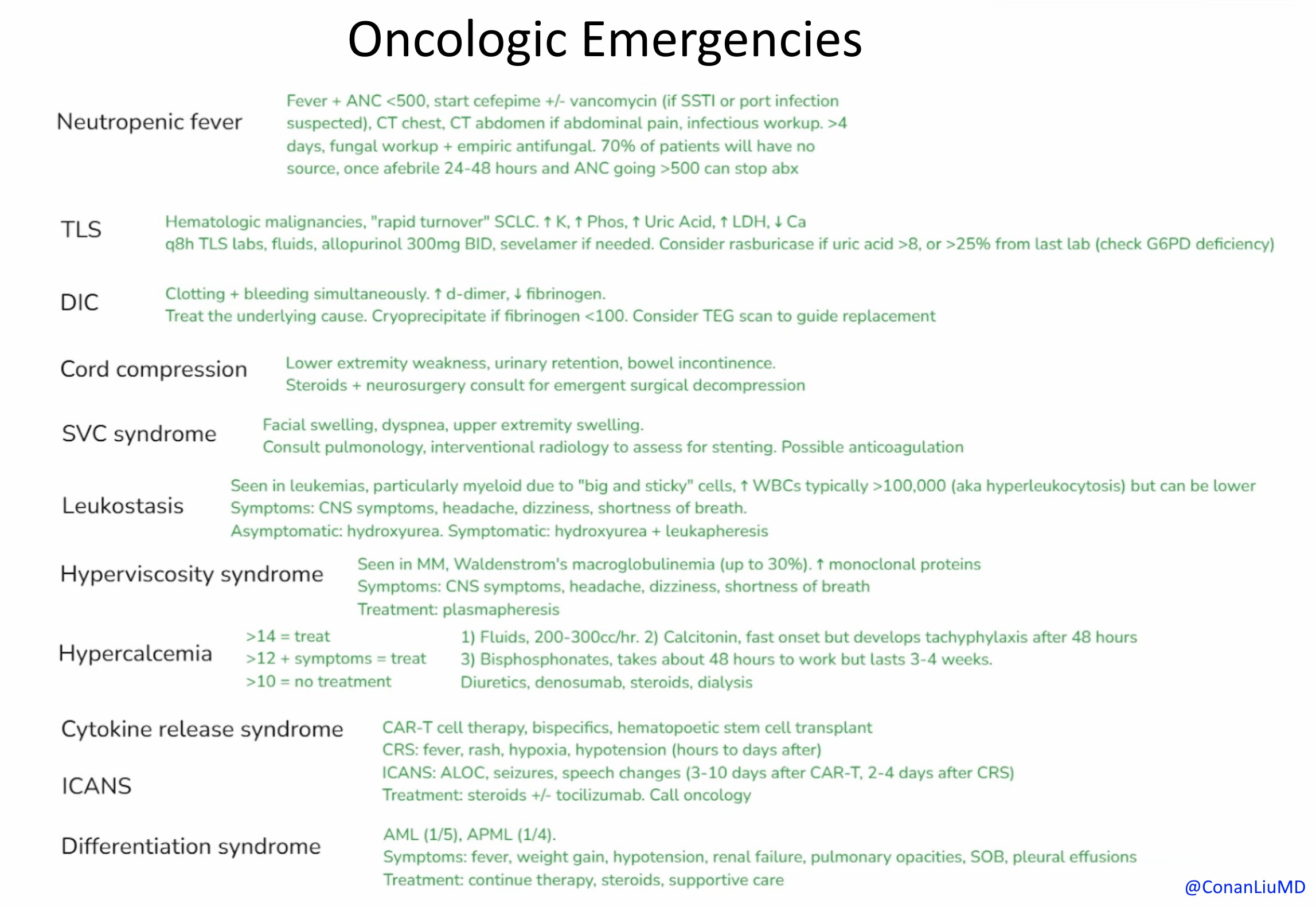
Summary of Oncologic Emergencies

Neutropenic fever:
- Fever + ANC < 500 → start cefepime ± vancomycin (if SSTI or port infection suspected)
- CT chest; CT abdomen if abdominal pain; full infectious work-up
- If febrile > 4 days → add fungal work-up + empiric antifungal
- 70 % of patients will have no identifiable source
- When afebrile 24-48 h and ANC rising > 500 → may stop antibiotics

TLS (tumor-lysis syndrome):
- Hematologic malignancies, “rapid-turnover” SCLC
- Lab changes: high K, high Phos, high uric acid, high LDH, low Ca
- q8 h TLS labs, aggressive fluids, allopurinol 300 mg BID, sevelamer PRN
- Consider rasburicase if uric acid > 8 mg/dL or > 25 % rise from last lab (check G6PD first)

DIC (disseminated intravascular coagulation):
- Simultaneous clotting and bleeding; high d-dimer, low fibrinogen
- Treat underlying cause
- Give cryoprecipitate if fibrinogen < 100
- Consider TEG to guide replacement

Cord compression:
- Lower-extremity weakness, urinary retention, bowel incontinence
- High-dose steroids + urgent neurosurgery consult for decompression

SVC syndrome:
- Facial swelling, dyspnea, upper-extremity swelling
- Consult pulmonology / interventional radiology for possible stenting
- Consider anticoagulation

Leukostasis:
- Usually myeloid leukemias; “big & sticky” cells; WBC often > 100 000 (can be lower)
- Symptoms: CNS changes, headache, dizziness, shortness of breath
- Asymptomatic: hydroxyurea
- Symptomatic: hydroxyurea + leukapheresis

Hyperviscosity syndrome:
- Seen in MM and Waldenström macroglobulinemia (incidence up to 30 %)
- Symptoms: CNS changes, headache, dizziness, shortness of breath
- Treatment: plasmapheresis

Hypercalcemia of malignancy:
- Calcium > 14 mg/dL → treat
- Calcium > 12 mg/dL with symptoms → treat
- Calcium > 10 mg/dL without symptoms → no immediate treatment
  1. Aggressive IV fluids (200–300 mL/h)
  2. Calcitonin (rapid onset; tachyphylaxis after ~48 h)
  3. IV bisphosphonates (onset ~48 h, duration 3–4 weeks)
  4. Adjuncts: loop diuretics, denosumab, steroids, dialysis

Cytokine-release syndrome (CRS) / ICANS:
- Occurs after CAR-T, bispecifics, or HSCT
- CRS: fever, rash, hypoxia, hypotension (hours-to-days post-infusion)
- ICANS: altered level of consciousness, seizures, speech changes (CAR-T day 3–10; 2–4 days after CRS)
- Treatment: corticosteroids ± tocilizumab; call oncology early

Differentiation syndrome:
- Seen with AML (~20 %) and APL (~25 %) during therapy
- Symptoms: fever, weight gain, hypotension, renal failure, pulmonary opacities, SOB, pleural effusions
- Treatment: continue differentiating agent, add steroids, supportive care

#Oncologic #Emergencies #Oncology #HemeOnc #Diagnosis


