"Imagine you're running airport security, screening passengers (tests) to catch dangerous items (diseases). Now meet your two star agents: Sensitivity and Specificity.

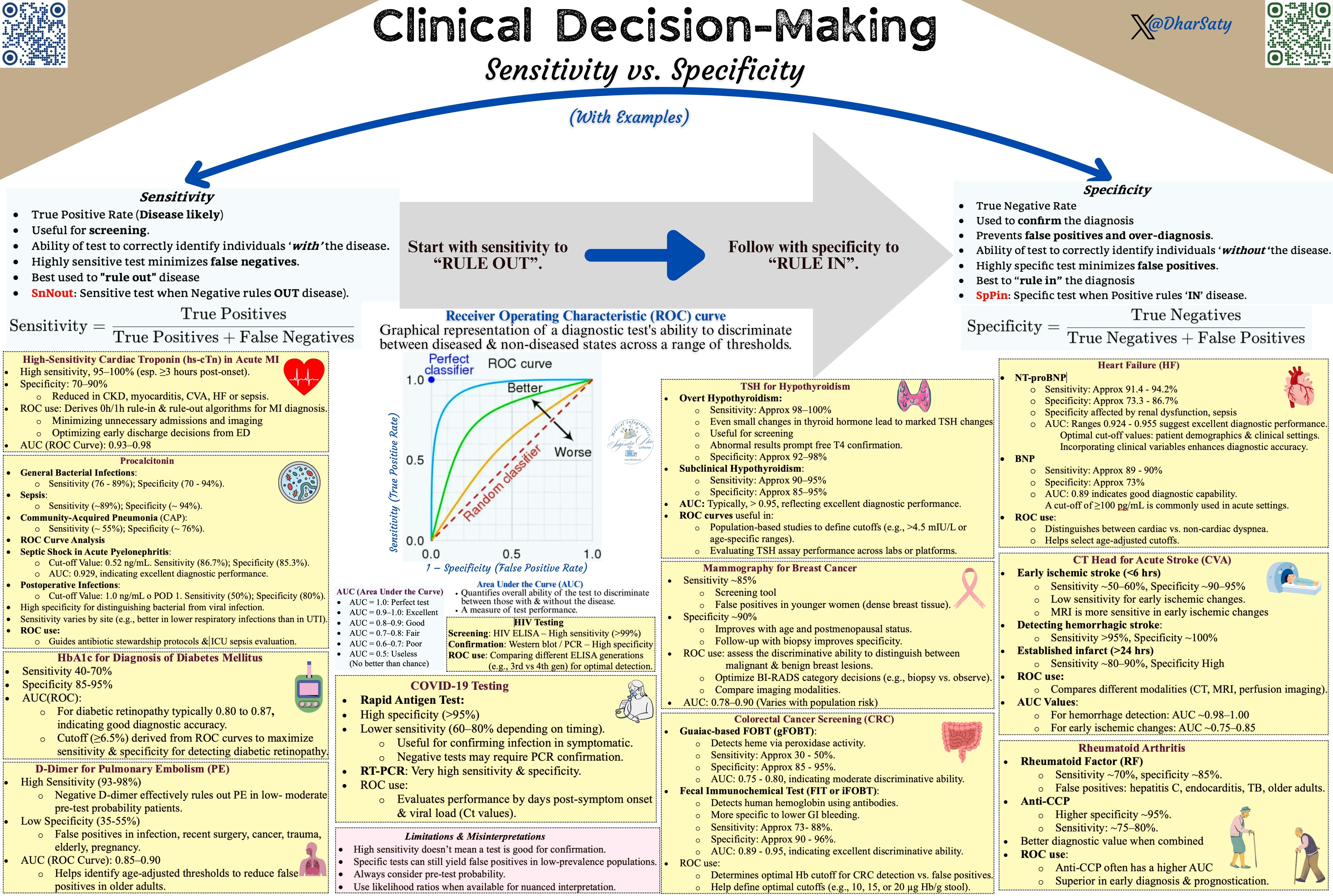
Sensitivity is your overachiever. It’s all about catching every possible threat. If a test has high sensitivity, it correctly identifies most people with the disease—it rarely misses anyone. In other words, it’s great at picking up true positives. The downside? It might sometimes flag innocent travelers (false positives), just to be safe.

Specificity, on the other hand, is cool and precise. If a test has high specificity, it correctly clears people without the disease—it rarely calls someone sick if they’re actually healthy. That means fewer false alarms (false positives), but if it’s too strict, it might miss some real cases (false negatives).

In short:

High sensitivity = fewer false negatives.
High specificity = fewer false positives.

#medicine #specificity #sensitivity


