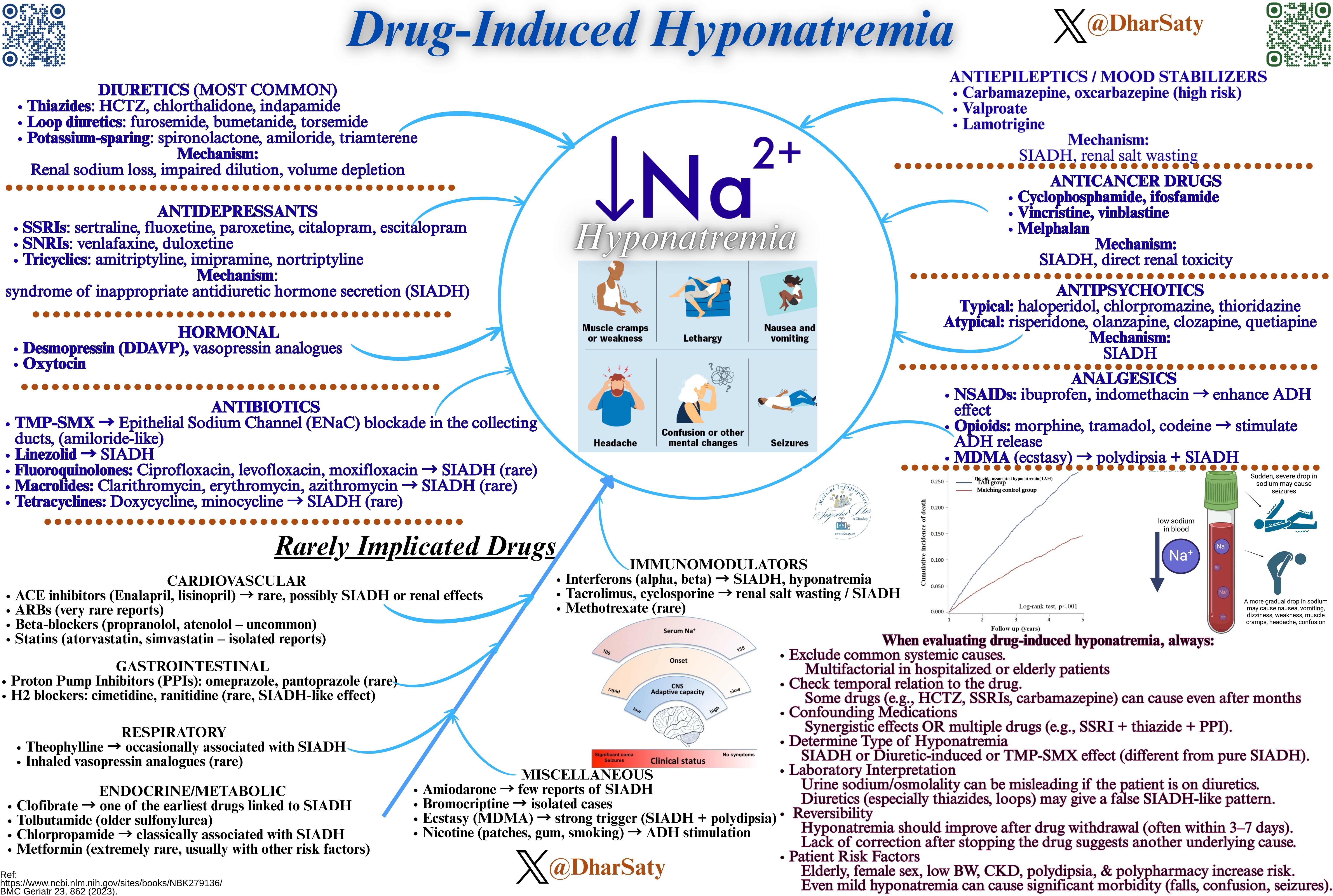
Think of sodium as the ultimate event planner in your body, the one who keeps everything orderly, balanced, and running on time. Sodium knows how to keep water in the right places: not too little, not too much, just the perfect hydration vibe. It’s like that one responsible friend who prevents the party from getting out of control.
Now, here’s where the drama starts: certain medications like thiazide diuretics, SSRIs, carbamazepine, and their buddies decide they know better. Instead of appreciating sodium’s years of experience, they “reassign” it, often flushing it away or silencing its role in water regulation. It’s like firing the competent manager and hiring an overenthusiastic intern.
With sodium out of the picture, water seizes the opportunity. It floods the party like uninvited guests crashing a wedding buffet pouring into cells, especially in the brain. At first, the brain cells are polite, trying to squeeze in a little extra water. But soon they swell like overfilled balloons, and the nervous system throws a fit: headaches, confusion, unsteady gait, seizures and in severe cases, a medical emergency that’s about as fun as a power outage during surgery.
The irony? This whole watery rebellion isn’t caused by an exotic tropical disease or some rare genetic mutation it’s often the very “helpful” medications prescribed to make life better. That’s drug-induced hyponatremia: when well-meaning pills accidentally kick sodium out of its leadership role, and water runs the show like a toddler hyped on sugar.
So, the moral of the story? Respect sodium, it may be small, but it’s mighty. And always keep an eye on those meds, because sometimes the cure sneaks in with a side hustle as the troublemaker.

#hyponatremia #sodium


