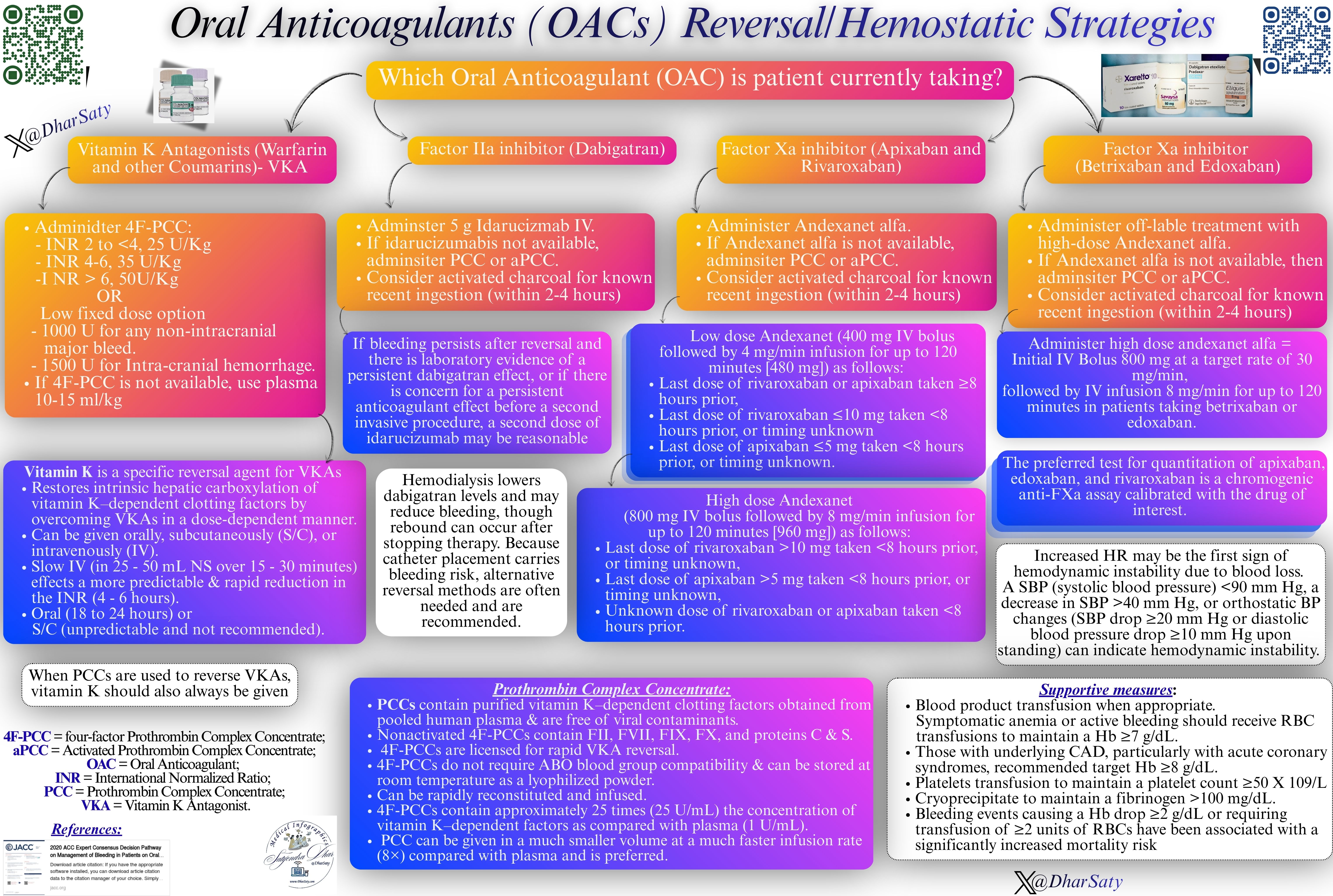
Oral anticoagulants and reversal/hemostatic strategies.

In the elegant tug-of-war between thrombosis and hemostasis, prescribing an anticoagulant is essentially telling the clotting cascade, “Let’s all just relax,” until the moment it relaxes a bit too much and starts free styling.

At that point, the clinician must pivot with theatrical composure, as if this was the plan all along, and gently convince the body to reconsider its life choices. Enter Vitamin K, the polite memo to the liver that productivity is once again expected; Prothrombin Complex Concentrate (PCC), essentially clotting factors arriving like an overprepared emergency committee; and the delightfully specific Idarucizumab and Andexanet alfa, which function as the rare “ctrl+Z” buttons in medicine.

All the while, the clinician must maintain a reassuring calm because nothing stabilizes a patient quite like someone who looks as though reversing a potentially catastrophic bleed is merely a minor administrative correction, rather than an intense, real-time negotiation with a coagulation system that occasionally behaves like it has read the textbook and chosen rebellion.

#Dabigatran #Idarucizumab #FXaInhibitors #Apixaban #Rivaroxaban #Edoxaban #Andexanetalfa #ProthrombinComplexConcentrate #PCC #aPCC #Plasma  #FFP #Bleeding #hemostasis


